The terms of reference (TOR) aim to inform stakeholders about the evaluation, clarify expectations and requirements and guide the evaluation team in its work during the various phases of the evaluation.
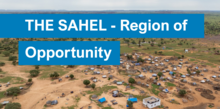
This Sway document introduces the Sahel Resilience Partnership (SRP) and showcases its work through photos and videos from the field.
Financed by BMZ and jointly implemented by WFP, UNICEF, and GIZ, the SRP operates in Mauritania, Mali, Burkina Faso, Niger, and Chad. The partnership strengthens food and nutrition security, climate resilience, ecosystem restoration, social services, and social cohesion, while promoting gender equality, disability inclusion, and youth empowerment
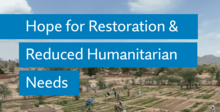
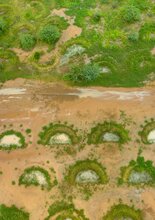
This interactive story explores how land restoration in Chad is helping reduce humanitarian needs while strengthening food security, livelihoods and long-term resilience. As you scroll, you will see how proven, community-driven solutions are bringing degraded agricultural and pastoral land back to life by restoring soil health, increasing vegetation cover and improving water management in some of the Sahel’s most fragile environments.
Discover how simple but scalable approaches, strong national partnerships and local knowledge are already transforming landscapes and lives and in Chad.
Over the last five years, WFP and partners have restored over 300,000 hectares across the Sahel, transforming the lives of 4 million people in 3,400 villages. This progress has improved food availability, nutrition and resilience against economic shocks – reducing the need for humanitarian assistance.
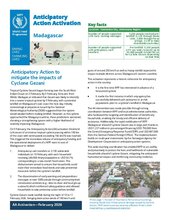
On 9 February, the Anticipatory Action (AA) activation threshold (a forecast of an intense tropical cyclone passing within 100 km of the coast with wind speeds exceeding 166 km/h) was reached. This triggered the immediate release of anticipatory funding and the operational deployment of a WFP team to east of Madagascar.
This decentralized evaluation was commissioned by the WFP Moldova country office and covers the Cash Based Transfers and Social Protection Activities in Transitioning Emergency Assistance to National Systems and Preparing for a Responsible Exit in Moldova, March 2022 to February 2026.
The terms of reference (TOR) aim to inform stakeholders about the evaluation, clarify expectations and requirements and guide the evaluation team in its work during the various phases of the evaluation.
The terms of reference (TOR) aim to inform stakeholders about the evaluation, clarify expectations and requirements and guide the evaluation team in its work during the various phases of the evaluation.
The terms of reference (TOR) aim to inform stakeholders about the evaluation, clarify expectations and requirements and guide the evaluation team in its work during the various phases of the evaluation.
The terms of reference (TOR) aim to inform stakeholders about the evaluation, clarify expectations and requirements and guide the evaluation team in its work during the various phases of the evaluation.
The terms of reference (TOR) aim to inform stakeholders about the evaluation, clarify expectations and requirements and guide the evaluation team in its work during the various phases of the evaluation.
The terms of reference (TOR) aim to inform stakeholders about the evaluation, clarify expectations and requirements and guide the evaluation team in its work during the various phases of the evaluation.
This strategic evaluation assessed the relevance, appropriateness and effectiveness of WFP’s approaches to targeting and prioritization for food and nutrition assistance in a time of rising needs and shrinking resources, covering the period from 2019 to 2025.
This decentralized evaluation was commissioned by the WFP Rwanda Country Office and covers the United States Department of Agriculture (USDA) McGovern-Dole Grant for Home-Grown School Feeding Programme (HGSF) implemented in Rwanda from 2020 to 2025 (FY20 project). The 2025 endline is the final exercise in a three-part evaluation series, following the midterm evaluation (2023) and a baseline study (2022).